Skip to content
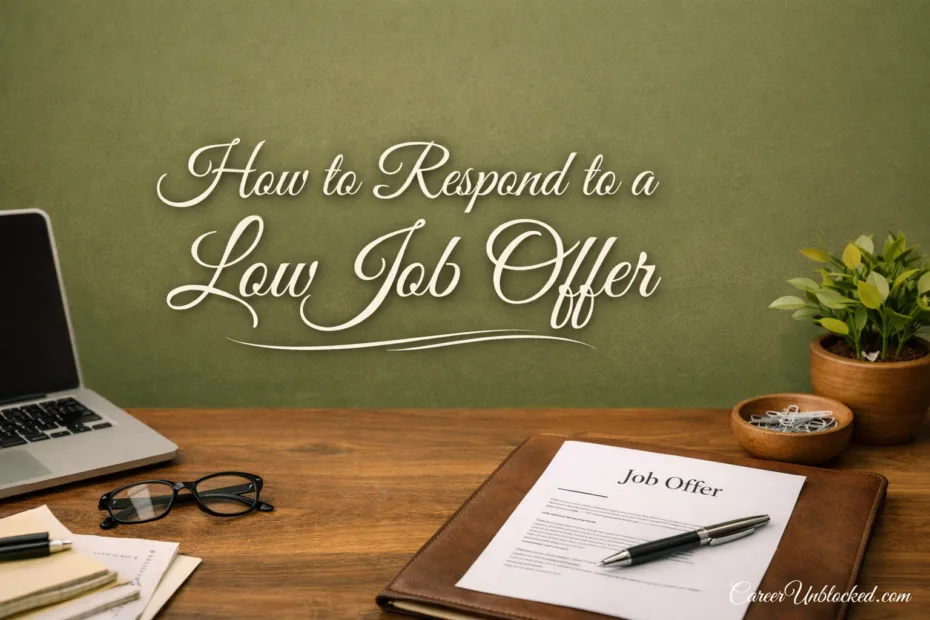
A person holding a pen and reviewing a job offer letter on a wooden desk.

How to Respond to a Low Job Offer

If the offer feels low, the problem is rarely just the number. It’s usually about role scope, market alignment, and how much leverage you realistically have. A clean response starts by separating emotion from inputs: what the job is, what you bring, and what the employer can plausibly move. A low job offer is also ambiguous. It can mean “we’re constrained,” “we’re testing,” “we misread… 
What If You’re Underpaid and Don’t Know It?

Many people assume they’d know if they were underpaid. In practice, underpayment is often quiet: it hides behind job titles, internal pay bands, and the fact that most salaries are treated as private information. If you’ve ever wondered, “Am I being paid fairly?” the useful goal is not to label your employer as good or bad. The goal is to reduce uncertainty. Underpayment is a… 

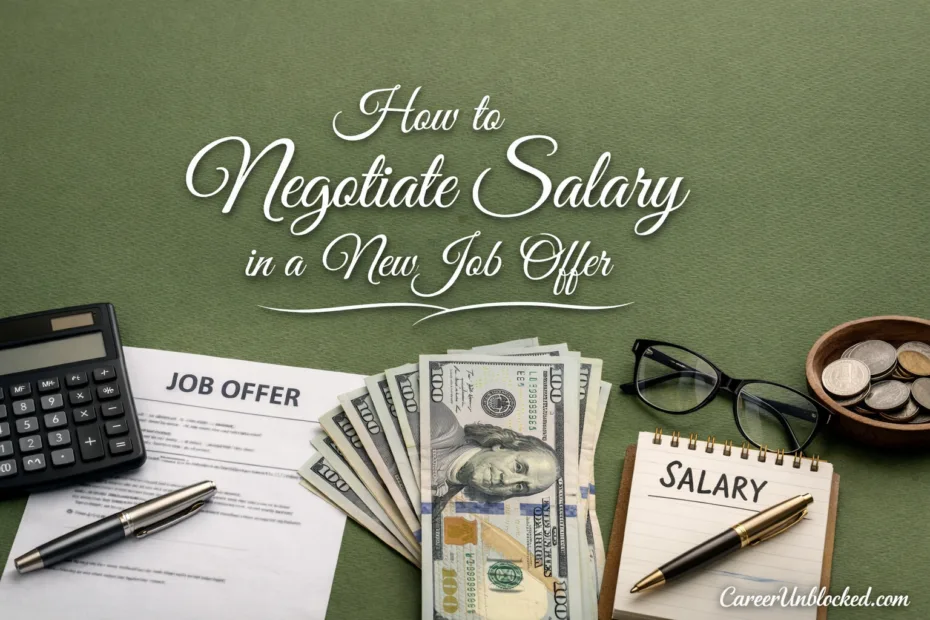
A person holding a pen with a salary negotiation document and cash on a desk.

How to Negotiate Salary in a New Job Offer

When you get a new job offer, salary negotiation is rarely about “asking for more.” It is about reducing risk, aligning expectations early, and making sure the deal fits your actual market value and constraints. A good negotiation leaves both sides with a clear, workable agreement—not lingering tension, not vague promises. This guide walks through how to negotiate pay in a new offer with clear… 

A person sitting at a desk with an open notebook and pen, preparing to ask for a raise.

How to Ask for a Raise (Without Burning Bridges)

Asking for a raise is rarely just about money. It is a conversation about value, timing, and the working relationship you will still need after the answer—whether it is yes, no, or “not now.” If you approach it as a negotiation battle, you can win the number and lose the trust. If you avoid it entirely, you can protect comfort and quietly accept misalignment. The…